Everyone has a funnel. Almost nobody has the machine underneath it. I build that machine, inside the platforms you already pay for.
Nearly 20 years in GTM operations / 2 live builds right now
building and running go-to-market operations in tech
companies served, from launch to enterprise
companies founded, built and sold
to something live in your own account
Who this is for
If you recognise yourself in one of these, the first call is worth having. If you do not, I will say so.
You have a team, a CRM, and years of history in it. What you do not have is a machine, and everyone is busy enough that nobody can stop and build one.
The first thing you need is clients, and nobody on the team has done this before. The product is ready or nearly ready, there is no machine behind it, and the first hire you are considering costs more than the engine does.
Not a fit: single campaigns, one-off creative, or anyone who wants a deck rather than a build.
How it runs
Not a discovery phase that ends in a slide deck. The first working piece ships while the rest is still being built.
Everything you already have, listed and colour-coded by how proven it is. Gaps included. You keep this whether or not we work together.
Written fit definition, segments, messaging per segment, and the KPIs the build will be judged on. Signed off before anything is built.
Usually the intake and screening layer, or the first sequence. Something running and measurable, so the rest is built against real behaviour.
Lifecycle, routing, suppression, nurture, reporting. Built in order of what unblocks the next thing, not in order of what is easiest.
Either it stays with me on a retainer, or it goes to your team documented, with the map kept current. Both are fine and the price differs.
Most people come for one of two things: where the clients come from, or why the ones they have are not converting. Take that module on its own, or take the whole engine. Same audit, same map, same standard of build either way.
The method
Nearly everyone has sources and some kind of outreach. What's missing in between is the part that decides what deserves attention, and underneath it, the part that proves any of it worked. Here's what gets built at each layer.
What it answers
Most companies can't answer this. Records arrive from enrichment tools, forms, events, imported spreadsheets, product signups and partner referrals. Once they are in the database nobody can tell which door they came through, so nobody can tell which door is worth funding.
Without it: you spend on channels you can't evaluate, and every quarterly review becomes an argument about whose numbers are right.
What it answers
This is the layer almost nobody builds, and it's the one that decides whether everything after it can be trusted. A new batch of contacts should not be able to touch a sequence the moment it lands. It should be held, screened against everything you already know, and released deliberately.
Without it: the embarrassing email. The customer who receives a cold pitch. The list that goes out twice. Every one of those is a gate that was never built.
What it answers
Routing is where a database becomes a queue somebody can actually work. It classifies, scores, assigns, and stamps a single lifecycle field that everything downstream can rely on.
Without it: a shared queue with four thousand records in it, worked from the top down by whoever has time.
What it answers
One message to the whole database is the most expensive thing a company can send, because it burns the list and teaches you nothing. Each segment gets an opener built on what that segment actually optimises for. The contacts you can't classify get a message that asks, rather than one that guesses.
Without it: a one percent reply rate, and no way to tell whether the problem is the list, the offer, or the sentence.
What it answers
Most CRMs can tell you an email was sent. They cannot tell you a connection was accepted, a call went well, or a meeting was really held. Those are precisely the events that matter, and they have to be captured deliberately or the funnel is fiction.
Without it: a monthly report everybody distrusts, and decisions made by whoever argues most confidently.
What it answers
This is what makes it an engine rather than a pipeline. What the instrumentation learns is wired back into the gate and the routing, so outcomes change future behaviour automatically, instead of waiting for somebody to spot a trend in a quarterly deck.
Without it: you have a funnel that runs. You do not have a system that improves.
What we build
Most teams have pieces. A CRM nobody trusts, a list somebody bought last year, a sequence that ran once and was never switched off. What is missing is the machine that connects them, so the number at the bottom can be traced back to the first touch.
A fit definition written down, lists built against it, and enrichment and scoring before anyone sees a name.
Sequences across channels that stop the moment someone replies. Written per segment, in the language they read.
The demand that comes to you. Search, content, paid and events, measured on pipeline instead of clicks.
Every hand raise lands somewhere with its source attached, and gets worked before it goes cold.
The operating layer. Who owns what, what is due, and a report your management team opens.
All of it lands in one CRM, and the CRM is where the truth lives. Lifecycle stages that mean something, suppression that suppresses, and routing that survives a reorg. Built where your team already works, on the licence you already pay for.
You own every piece of it. Workflows documented, lists explained, and a status map that says which parts are verified against live data and which are not.
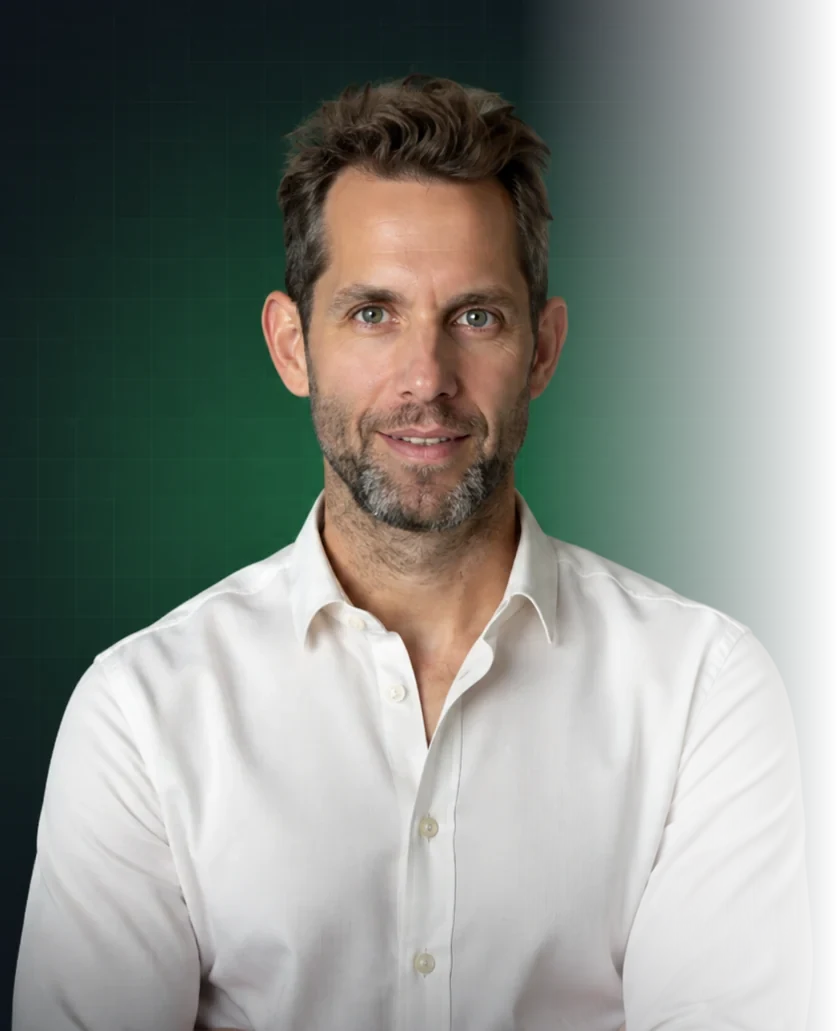
I built and ran eToro's partners department and its local offices from the beginning, for four years. I founded FXLeaders in 2012 and sold it in 2024. Nearly twenty years spent building the machinery behind other people's growth.
I started building with AI in 2022, before ChatGPT was public, when I built Sumeet for meeting transcription and summaries. Four years of working that way is why I can take on a full build and still do it myself. No account manager between you and the person building it.
AMIR RABINOWICZ / FOUNDER, GTM:METRICS
Selected builds
Three recent systems. Client-identifying detail stays where it belongs. The pattern is what transfers.
All six layers, end to end, inside the client's own CRM. Guarded intake with deliberate cohort release, collision screening against the full partner base, four suppression layers, routing by language, and five partner segments each with their own opener, plus a catch-all sequence that classifies the unclassified.
Delivered with a clickable status map: every component colour-coded by how proven it is, gaps included.
Performance data spread across analytics, search and monetisation with no single place to look, and therefore no defensible way to decide what to work on next. An automated layer pulls the sources in via API and publishes one live view.
The output isn't a report. What the dashboard surfaces becomes prioritised tickets in the delivery backlog, so measurement ends in work rather than in a slide.
When the tool doesn't exist, we build the tool. A browser extension captures prospects at source into a purpose-built CRM: a sixteen-stage pipeline, decision-maker flags, explicit fit signals, and message-variant attribution wired in from the very first record.
It's on this page as evidence for the claim above it: one person, working with AI, shipping a real application in weeks.
Why this is different
Most agencies sell senior strategy and staff the delivery with junior account managers. That is where the quality goes. There's no handoff here, because there's nobody to hand off to.
The strategy call and the hands in your CRM belong to the same person. Nothing is lost in translation because nothing is translated.
Every build ships with a status map colour-coded by how proven each piece is. You always know exactly what you own and what you don't.
AI does the heavy lifting on the build; the judgment stays human. We'd rather pass the speed on than pad a retainer with it.
A handful of engagements at a time. If we're full we'll tell you when we're not, rather than hiring somebody to be us.
Who we are
Amir Rabinowicz
Founder / GTM & Growth
Nearly 20 years building companies and leading high-growth marketing operations in tech. Built and led eToro's partners department and its local offices from the beginning, for four years, when affiliate programs in fintech were still being invented.
Founded FXLeaders in 2012 and grew it into the largest trade analysis and ideas provider in the world, sold in 2024. Now builds go-to-market infrastructure, increasingly with AI, which is why the work ships in weeks rather than quarters.
Ron Rabinowicz
CMO / Marketing & Growth Advisor
Over 15 years as a multi-disciplinary marketing leader and consultant, with a deep understanding of how marketing and sales actually connect. Specialises in scaling B2B and B2C organisations, from fast-growing startups to large-scale companies.
Data-driven and performance-based, always with an ROI mindset. A proven record creating, managing and running marketing strategy and operations.
The first two weeks produce a status map of your own stack. Every piece named, colour coded by how proven it is, gaps included. You keep it whether or not we work together.